

Permeable, impermeable
On miracles and hot springs

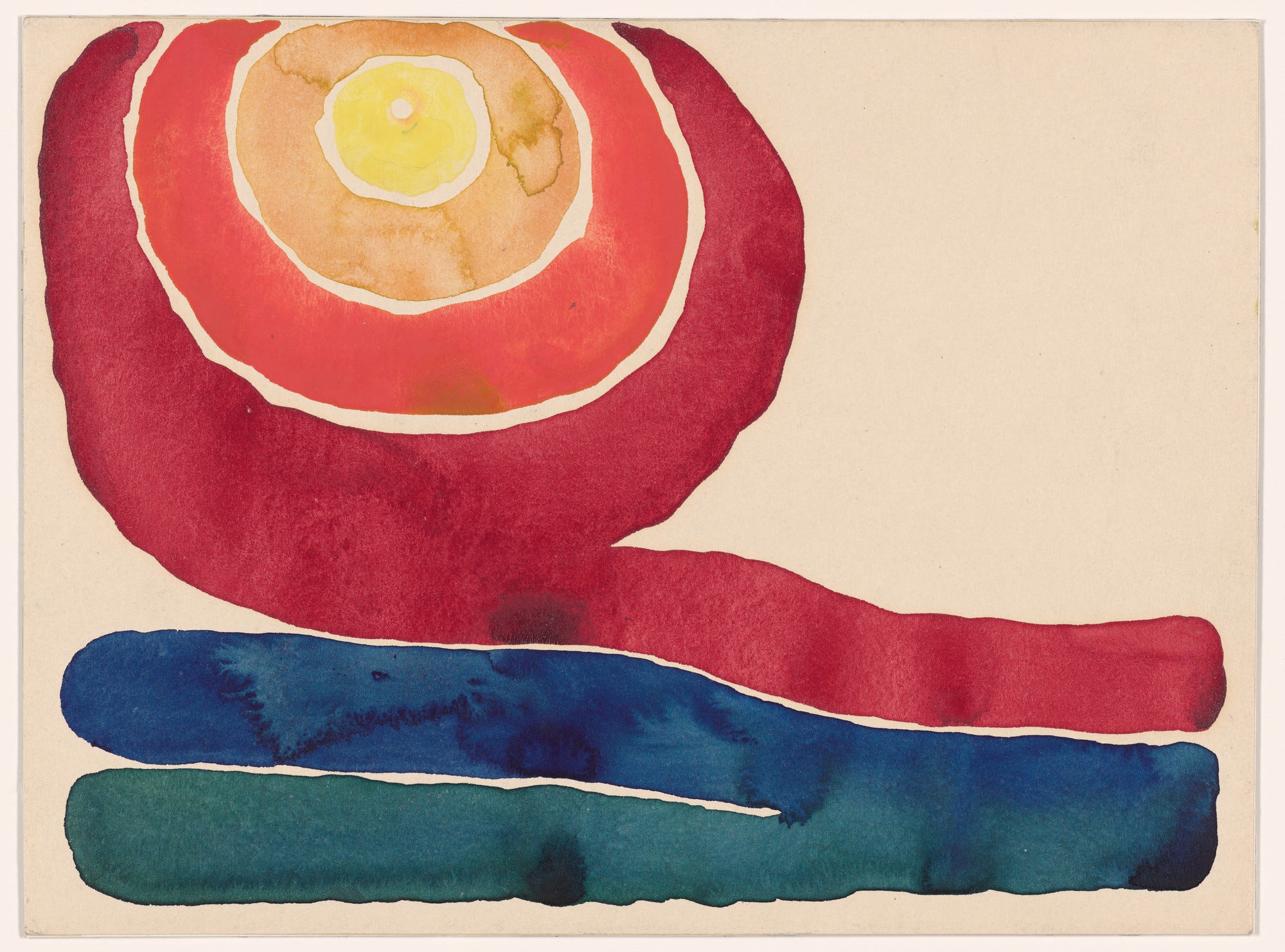
Ojo Caliente is a thousands-of-years-old hot spring in Northern New Mexico’s high desert. The springs were Tewa—used and held sacred for countless generations before the arrival of the Spanish. Ojo Caliente, as it was conceived, opened in the 1800s as the United States’ first health spa. Since then, people have traveled from all over the globe to soak. From the iron, arsenic, soda, and lithia pools, there have been—purportedly—miracles, overnight transformations, and slow and subtle changes in ailing bodies and minds. The day pass was $20 for a weekday soak when my family and I started visiting. This year it’s $45 (because, surely, healing waters must keep pace with inflation).
At Ojo, there’s a smattering of different groups: elderly soakers from the retirement communities in Santa Fe who have been bussed there in vans, Native families, European tourists (the men always in speedos), and an assortment of locals: women with turquoise rings padding around in Tevas, men with long white hair knotted into low buns—their faces replete with crow’s feet from days squinting in the strong desert sun.
Price hikes be damned, I love to spend the day at Ojo. It’s just shy of an hour outside of Santa Fe, a drive through Española that cuts through the Tesuque and Santa Clara Pueblos. The road follows Rio Ojo, cottonwoods, and arroyos—I’ve seen it now in bright sun and in blistering cold. When the wind whips up on the grounds, the air quite literally takes on the scent of the desert sage. It’s exceptionally peaceful, and the open-air soaking offers expansive views of Southwestern skies and pale red earth.


In April, I take a day off of work and my grandmother and I bring my cousin and his fiancée to soak at Ojo for the first time. My grandfather stays behind at the house with the dog, and I borrow one of my grandmother’s big palm-leaf cowboy hats to keep the sun off my face. We don our swimsuits and bob in the spring water together, rotating through the different pools. There’s something primordial about the waters. While soaking, I position my back against the jets and try to ignore the fact that there are skin cells (invisible) and hairs (visible) swirling all around me.
With the exception of a few small, quiet children who seem completely disinterested in soaking, my cousin Marshall, his fiancée Sara, and I are the youngest soakers there. Bodies are on display—I watch everyone enter and exit the pools, climbing the stairs as steam rises from their skin. I know there are eyes on me, too, when I sink into the water and withdraw from it. Soft bodies, elderly bodies enter and exit, the mineral water dripping off backs and bottoms of feet. At one point, I see a pair of elderly women—my grandmother’s age, in their eighties—enter the soda pool together and think, I too am resting my eighty-year-old bones.
From the outside, these women and I look so different, soaking in the soda water at opposite ends of the pool and the spectrum of age—but inside, our skeletons must bear a resemblance. I developed osteopenia and osteoporosis by my mid-twenties, and I’m still trying to understand the degree to which it’s progressed. I’ve soaked at Ojo at my sickest; I’d always hoped, privately, that the springs could cure me. That after a few days after soaking, my chronic illness would magically dissipate and the inflammation would cease. Now, I’ve soaked at Ojo having experienced something close to a miracle.
I unspool the past six months for Marshall and Sara, the three of us huddled in the corner of a pool while my grandmother naps in a loungechair. I tell them about the functional medicine doctor I started seeing, the Autoimmune Protocol, the food groups I cut out and the food groups I successfully reintroduced, and my absolute lowest point—when the inflammation and arthritis was at its very worst.
I tell them I’m off the corticosteroid that I was completely dependent on for almost fourteen years to manage my colitis—the same steroid that had been eroding my bone density year over year. In fact, I’m off medication completely for the first time in my adult life, all thanks to a new way of eating and months of effort to heal my gut. It’s surreal and fresh. I keep saying this word: miracle, because that’s what it feels like. I worry I’m proselytizing, verging on evangelical, but Marshall and Sara are sympathetic and amazed. They ask all the right questions.
***
I could wind and unravel the story of my chronic illness ten times over. I’ve turned it over like a stone again and again in my own palms. At times, I’ve looked it in the eye. At other times, I’ve avoided its gaze at all costs. There have been years when I’ve lived almost as though it didn’t exist. There have been years in which it has colored my waking moments, days in which it has completely taken over my thoughts.
Until now, it felt impossible to write about my colitis, the autoimmune disease that has affected so many facets of my life. I never had any clean, clear, straightforward narratives about it. I never felt like I had anything to say about it. No perspective, no takeaways. I still don’t have a clear narrative—there’s still no beginning, middle, and end. But I have crossed a threshold. I have solved something. There has been a resolution in a way, an understanding I’ve come to—something that feels so elusive for those of us wrestling with this thing we call autoimmunity.
All my life, I was told that there was no cause; no logic, no rhyme, no reason that my immune system stopped “tolerating” my body’s large and small intestines, failing to distinguish, as some immunologists put it, “self and non-self.” We know, broadly, that autoimmune conditions could be triggered by a number of things: exposure to chemicals and toxins, infections, stress, lack of sleep, and gut problems caused by an inflammatory diet—also known as the Standard American Diet (or, SAD), which has led to a proliferation of “bad” bacteria and unidentified food sensitivities.
Mounting evidence now suggests that processed foods disrupt our gut flora and cause “increased intestinal permeability.” Intestinal permeability—so-called leaky gut—allows food molecules and toxins to enter the bloodstream. The immune system may flare, triggering food sensitivities and autoimmune responses.1 This is precisely what the functional medicine doctor I began seeing believes was causing the rampant inflammation in my body, and precisely what we “treated” through diet and supplementation. After over a decade of cycling through medications, immunosuppressants, and biologics—and secretly hoping for a miracle every time I visited the pools at Ojo Caliente—this was the only thing that ever worked.
People use this word, miracle, when they talk about healing. Something about ascribing it to myself feels corny, maybe even naive. But something miraculous did happen to me. Or, at least, it feels miraculous to me. I can now point to a reason—the root cause—for my autoimmune disease. And after being told that there was no cure and that I would be on medication for the rest of my life, the debilitating symptoms of my colitis are gone. My eczema and psoriasis are gone. I don’t know if I can say I’m “healed,” but my skin and bloodwork tell me I’ve beat the inflammation back. Miracle comes close to the sense of awe I feel, the sense that something spiritual or quasi-religious has occurred. A sense of baptism.
I still have a lot of feelings and thoughts to parse about Western medicine (how it saved my life on the one hand, but failed to address the root cause of my autoimmune disease on the other), our food system in the United States, how my relationship with food and eating has changed, and about gut health and the immune system and its still-understudied axes. I still have a lot to learn and research, a lot to digest about the transformation that’s taken place in my body over the past year. There’s still so much I don’t know—about what comes next, and how what I’ve experienced is connected to the bigger systems in place. What I do know is that we are all much more permeable than we like to think.
***
The Friday after I return from Santa Fe, Junpei and I swim at our neighborhood Y. We’re not precious with our gym—I much prefer the comfort of normal looking people to the sculpted, filler-facade of a luxury New York gym membership. This is not Equinox: the bodies here are soft, hairy. Everyone has normal teeth. The Y is crowded for a Friday after work. We swim laps in the slow-to-medium lane. Swimming is a piece of the puzzle that is the task ahead of me now: rebuilding my bone density through weights, strength training, and anything low-impact that can get my heart rate up.
Junpei’s shoulders cut through the water and I swim freestyle. We cycle through our laps in our swim caps and goggles. When we meet each other at the end of a lane, he points: there’s a flesh-like piece of rubber—the color of skin—floating in the water. It looks like something one might adhere to their skin to cover a wound. We splash at it to move it out of our lane and point it out to the lifeguard, who looks down in disgust. I think of the pools at Ojo, of all the visible and invisible evidence of the other soakers that accumulates in the water over the course of a day. The body I sank into those waters in New Mexico was not a new body, but it was changed. I am changed. We keep swimming.
O’Rourke, Meghan. The Invisible Kingdom: Reimagining Chronic Illness. 2022.
I loved this. I'm happy to hear about your recent improvements with your chronic illness too - it's very encouraging! Reading about the springs also made me think of Father McGirr's grave in Ireland. Sometimes the fantastical myths and legends come from something very real. In that case, it was Streptomyces!