

Late winter, early spring reading: Time loops, abandonment, and diaries
Three books I've loved—featuring Solvej Balle, Cal Flyn, and Marlen Haushofer

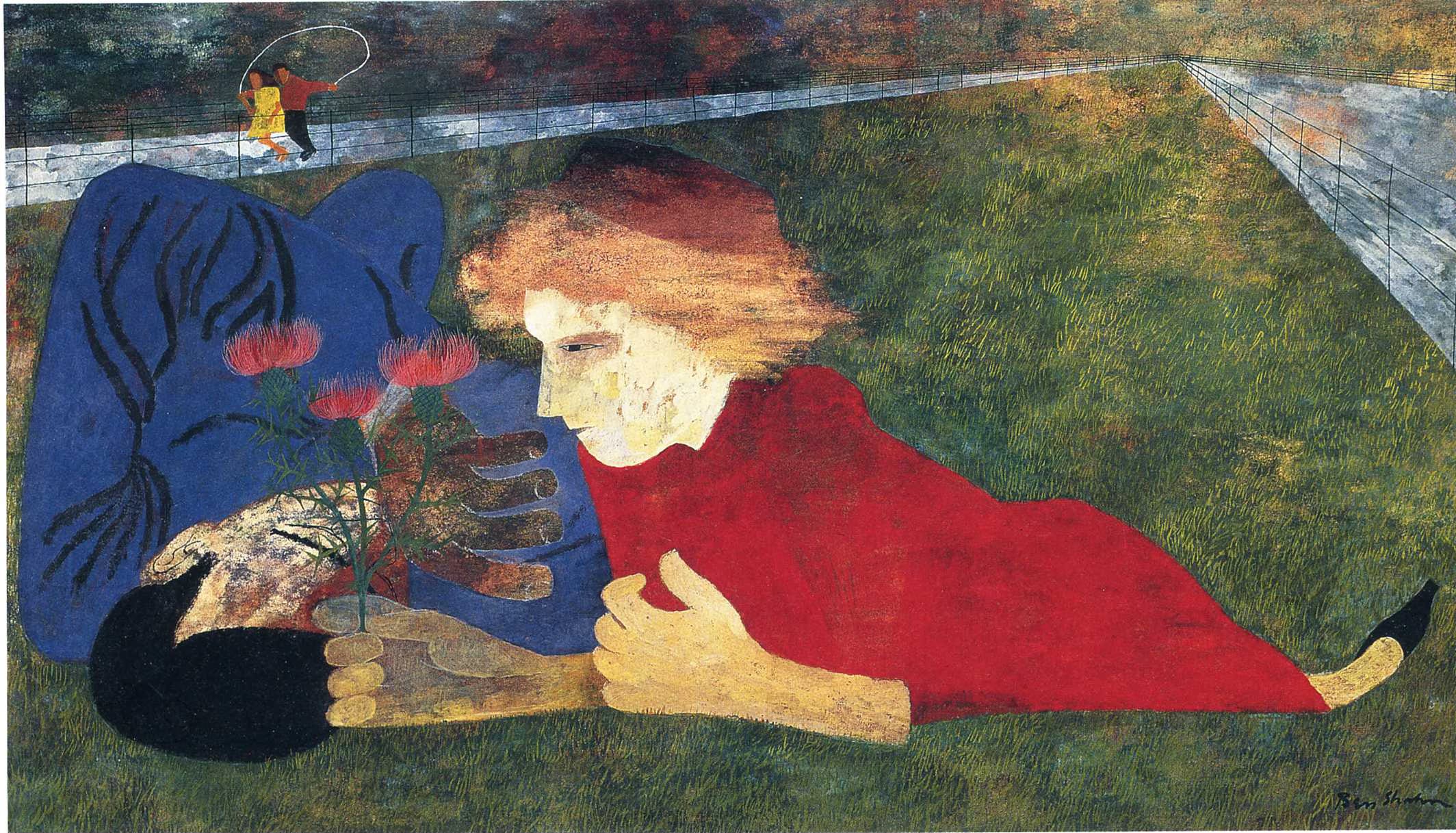
Spring has looped in and over itself this year, a kind of seasonal Ouroboros. Over the past month, I bounced around from Santa Fe, New Mexico, back to Brooklyn, then to Richmond, Virginia. The effect has been a kind of temporal compression. At home in New York, my days melted together like snow on concrete—bottom-heavy days, days of slush. I left the tail end of a long and deep urban winter the second week of March. In New Mexico, it was early spring in earnest—none of the pretense on the East Coast.
In Santa Fe, I walked my grandparents’ poodle to the park on a few occasions alone. At 3 pm, the UV would be at 7 and the wind would be fierce, whipping up the dust, which travels there in vertical sheets like rain during droughts. I’d wear my cream anorak with the hood drawn over my hair, the dust pummelling the poodle and me. I’d feel, briefly, like Peter O’Toole in Lawrence of Arabia, wild-eyed under layers of fabric.
This was dramatic—Santa Fe is not the Sinai and the dog is not a camel. Teslas would drive by us and kick up more dust. We’d pass Sotheby’s signs. Still, through the dust—a bright, becoming spring: the cherry blossoms around town huffed pale pink petals and pale green buds punctuated the ends of the cottonwoods’ wild expanse. At the botanical garden, the cholla bloomed verdant yellow. The smell of sage, the juniper jostling in the wind, the daffodils there—suddenly, overnight—in great terracotta pots around the Plaza.
I left New York in a sweater. In Virginia, at my mom’s, it’s balmy—almost tropical. Yesterday, we wore shorts and ballcaps to take an evening walk along the river. My skin has recovered from the punishing dryness that cracked my lip and split the skin between my fingers in New Mexico, and my mother’s azaleas and Carolina jessamine are loud, fragrant, falling over themselves in the 80-degree heat.
My hope is that I can stretch this fleeting season out as long as humanly possible, scrape it across the flat sheet of time. I’m coveting a return to New York in which I find myself in the same weather—the same season—I’ll leave in the South, cheating summer’s flagrant march, lingering in spring in perpetuity.
This desire isn’t novel, or probably even my own. I’ve read twelve books since the start of the year, among them Solvej Balle’s On the Calculation of Volume (Book I), Marlen Haushofer’s The Wall, and Cal Flyn’s Islands of Abandonment. My desire for a perpetual spring has been borne, I think, from a season of reading fiction and nonfiction that traces similar desire lines and follows similar time loops.
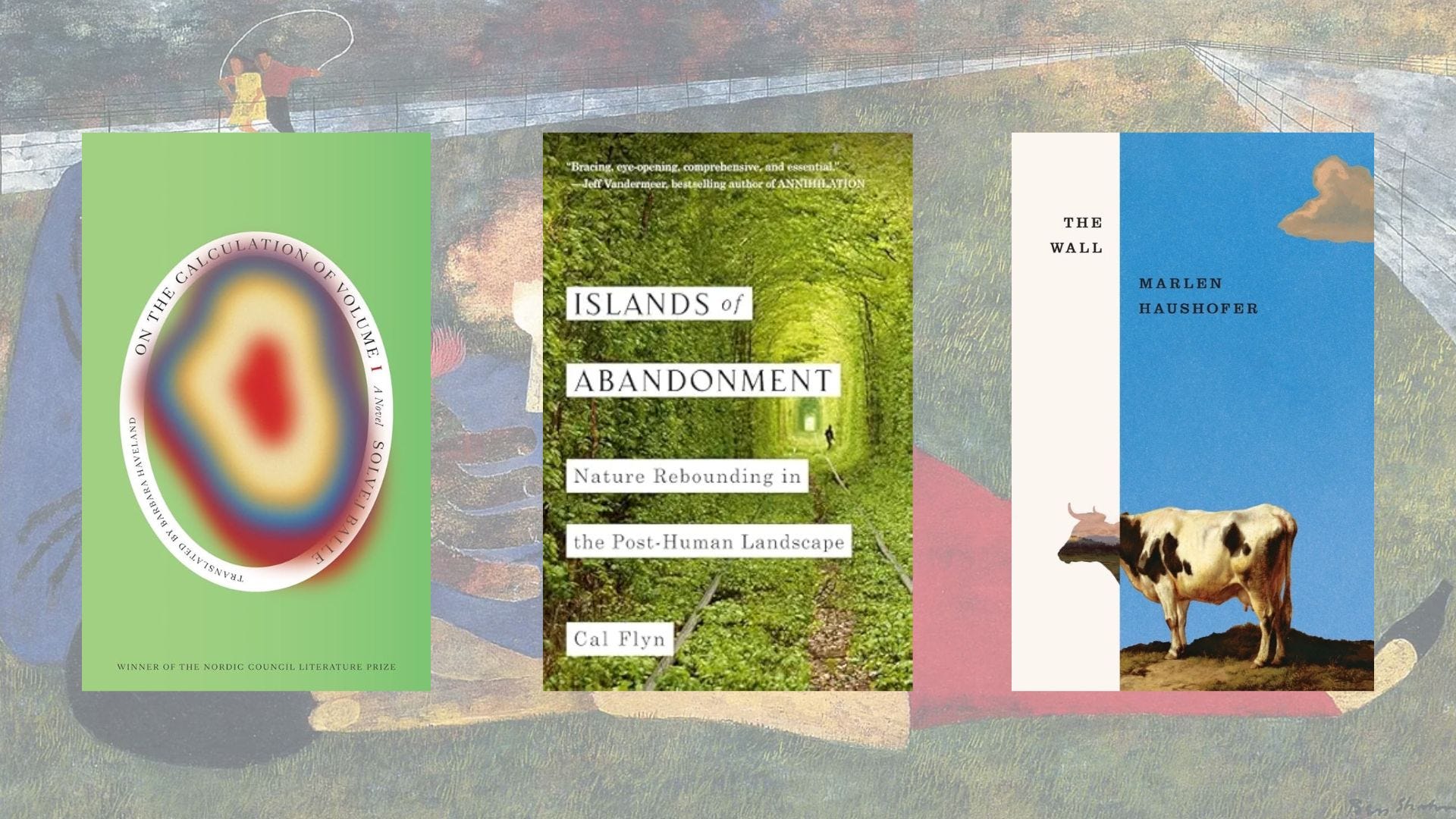
Solvej Balle’s On the Calculation of Volume (Book I), unfolds through Tara Selter’s diary. Tara is a bookseller trapped in the perpetual recurrence (à la Groundhog Day) of November 18th. After an otherwise ordinary day spent traveling for business, Tara wakes up to find that time is no longer advancing. For Tara, November 18th becomes, as Henrik Karlsson recently wrote, “enormous.” The ceaseless march of days ends—time halts—and her experience of November 18th expands. Balle’s novel is a time-loop narrative in the classic sense; Tara, in her diary, records the contours of a reality that no longer accumulates in the way we’re all used to.
For the unnamed protagonist of Marlen Haushofer’s The Wall, time is relentless, unyielding—she writes in her report that it “extends into infinity like an enormous spider’s web… A gray and relentless net, in which every second of my life is captured.” The Wall chronicles the life of the last surviving person on Earth: a middle-aged woman who has been severed from the rest of the world by an invisible barrier trapping her in a secluded expanse of the Austrian Alps. Tara Selter, in reliving the same day over and over again, is suspended in that great, gray net of time. But in Haushofer’s protagonist’s extraordinary conditions, there is a kind of agency. In living, and ultimately dying, behind the wall, she realizes she could “murder time”:
But if time exists only in my head, and I’m the last human being, it will end with my death. The thought cheers me. I may be in a position to murder time. The big net will tear and fall, with its sad contents, into oblivion.
The two women are, in different ways, sealed inside time. Tara Selter cannot move forward, so she begins to move laterally. Haushofer’s narrator cannot step outside the forward march of time that unfolds behind the wall; the world beyond the wall is, quite literally, frozen. From opposite directions, each narrator confronts the problem of living when time no longer behaves as expected, turning to the diary to record their extraordinary circumstances. Writing becomes a way to prescribe a temporality to their situations, a form of preservation: Tara numbers the days, Haushofer’s protagonist uses a farmer’s calendar to keep track of the months.
Between On the Calculation of Volume and The Wall, I read Cal Flyn’s Islands of Abandonment. While not a diary, Cal Flyn documents real-world areas that have been, to an extent, reclaimed by nature due to the absence of human beings. She visits an island of feral cows, conflict zones, Chernobyl, toxic postoindustrial sites—all places where ecological processes encroach and time, in a sense, continues without us. Or, perhaps more accurately, continues without our interference.
Haushofer’s narrator considers her interventions (killing deer, clearing nettles, planting potatoes) negligible within a larger temporal scale: “I’m not a troublemaker worth taking seriously.” In Balle’s novel, Tara retreats to an unrented, empty home, leaving the house where her husband boils tea the same way day after day, for a liminal space. While she’s there, the evidence of her existence compounds in its close quarters.
For Balle, Flyn, and Haushofer, liminal spaces become a lookout post, a place to observe or contemplate a world from which human society, and all its markers of normalcy, has receded. In The Wall, mice have become “the masters” of the huntsmens’ huts the protagonist scours for supplies. At first, she finds the evidence of their mastery over formerly-human spaces “ghostly,” and is physically revolted by them. But later in the novel, after a transformational summer in the Alm, she feels quite differently, examining nature’s claim over her wealthy cousin’s abandoned black Mercedes:
It was almost new when we came here in it. Today it’s overgrown with vegetation, a nest for mice and birds… In spring and autumn, between its brown struts I can see the faded yellow of the upholstery, beech leaves, bits of foam rubber and horesehair torn out and pulled apart by teeth. Hugo’s Mercedes has become a wonderful home, warm and sheltered from the wind. More cars should be put in forests, they would make good nesting places.
The protagonist images, beyond the wall, that similar forces have taken shape: “In the open countryside there are probably thousands of them, overgrown with ivy, nettles and bushes. But they are quite empty and uninhabited.” When she looks through the wall, it seems to her that the world has been “slowly swallowed by nettles.” But what was once “damage” in her eyes becomes good. The Mercedes becomes “a wonderful home” for the mice and birds that have overtaken it. Flyn’s project is to train us to see the world in precisely this way: to see abandonment as a kind of transformation (albeit a neutral one) rather than loss. Reading The Wall, I wondered what Flyn herself would make of the world beyond the wall, of the cars in forests, of the beautiful and terrible march of the nettles’ ecological succession.
In On the Calculation of Volume, The Wall, and Islands of Abandonment, time—human time—is fractured, dethroned. These three books have stuck in my mind, their questions have toned my days. What can a day, in its enormity, contain? What about a month? A season? A year? How do we go on when continuity is broken, when catastrophe strikes, when our familiar rhythms are disrupted? I’m returning soon to New York’s quick, jump-start kind of spring, testing that big, grey net of time and holding onto some faith that it won’t tear and fall.